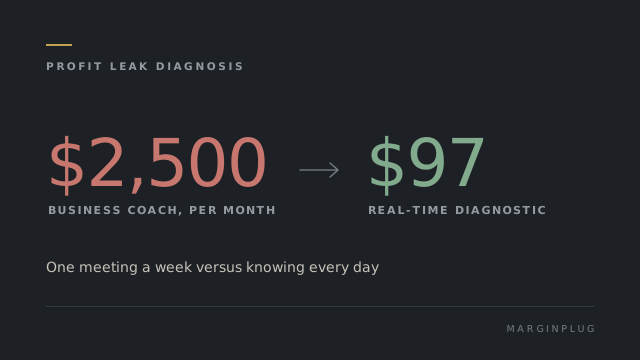
Why Hire a Business Coach When You Could Have a Real-Time Snapshot of Your Business Every Day?
The average HVAC coach costs $2,000–$4,500/month and meets once a week. A real-time diagnostic tells you exactly where cash is leaking — daily. Here's what each actually solves.
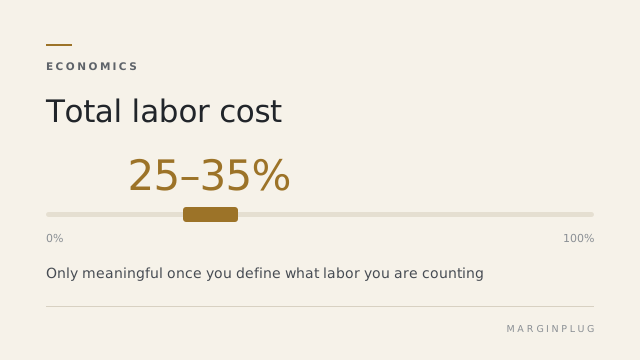
HVAC Payroll Percentage Benchmark: How Much of Revenue Should Go to Labor?
There is no useful payroll benchmark until you define what labor you are counting. Service, install, field, and total-company payroll are not the same number — and mixing them up is how owners misdiagnose the business.
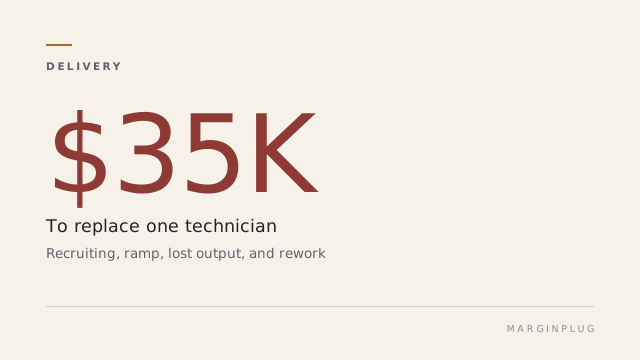
The Real Cost of HVAC Technician Turnover (2026 Benchmarks)
Turnover costs $35,000–$65,000 per departure once you count the ramp productivity gap, not just recruiting. Here's the full math, 2026 benchmarks, and why your best techs leave.
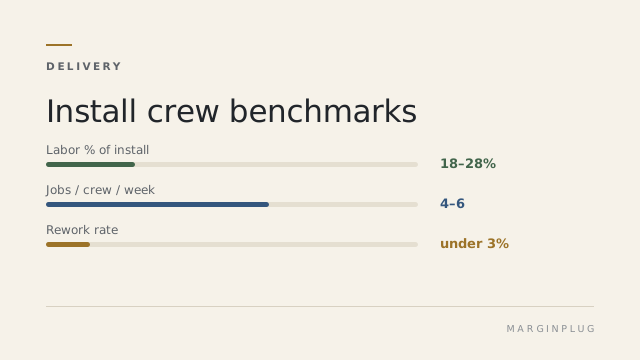
HVAC Installer Benchmarks 2026: Productivity, Output & Pay Standards
What top-quartile install crews produce per week, what installers get paid in 2026, and the 4 levers that separate a 3-install week from a 5-install week.
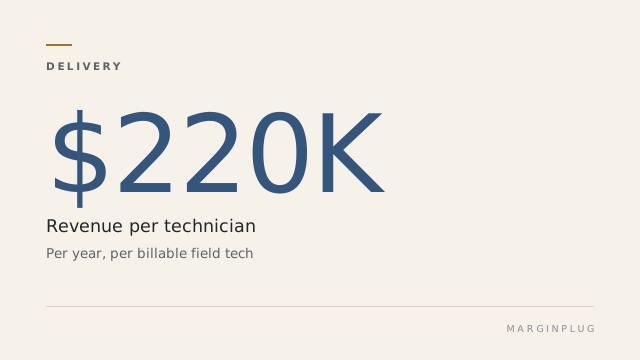
HVAC Revenue Per Technician Benchmark: What Each Tech Should Produce (2026)
The exact benchmark your GSC data is asking for: revenue per service tech, installer, and blended field employee — plus the profit levers that move the number.
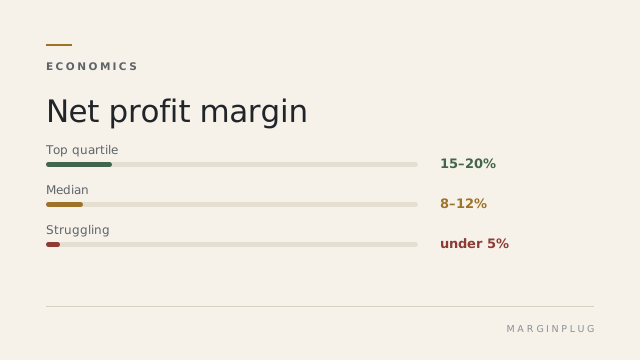
HVAC Profit Margin Benchmarks: What Good Looks Like by Job Type (2026)
Net profit, gross margin, service margin, replacement margin, maintenance agreement margin, and the job mix math that explains why two $2M HVAC companies can produce completely different owner income.
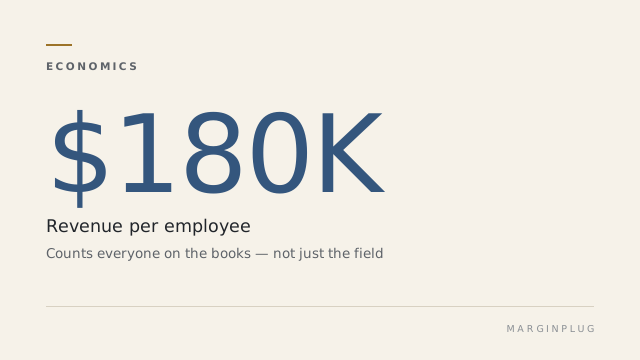
HVAC Revenue Per Employee Benchmark: What Your Payroll Should Produce (2026)
Revenue per employee shows whether your payroll is creating enough profitable output. Here are the 2026 benchmark ranges, payroll drag math, warning signs, and 90-day plan to improve profitability without blindly cutting headcount.
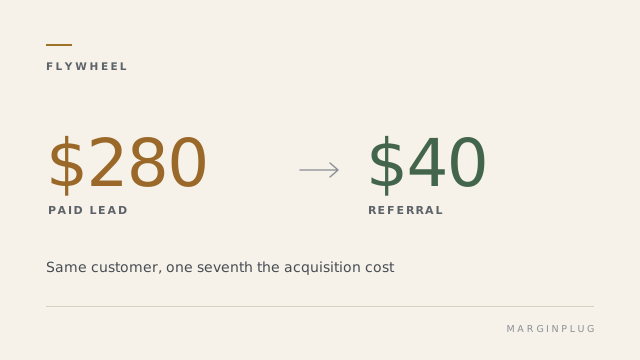
HVAC Referral Program: How to Turn Customers Into a Referral Engine (2026)
Most HVAC companies treat referrals like luck. This shows the math, benchmarks, tracking system, and 4-part process for turning happy customers into a repeatable referral channel with near-zero acquisition cost.
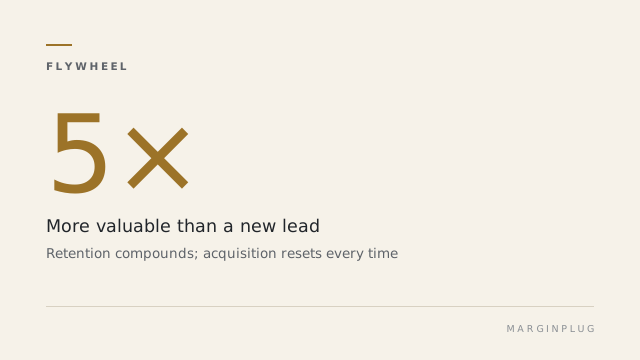
Why HVAC Customer Retention Is Worth 5x More Than a New Lead (2025)
Most operators spend 7–12% of revenue acquiring new customers while 65% of existing ones quietly churn. A retained customer is worth $1,840–$2,200 over 4 years. Here are the 2025 retention benchmarks and 4 levers that compound without additional marketing spend.
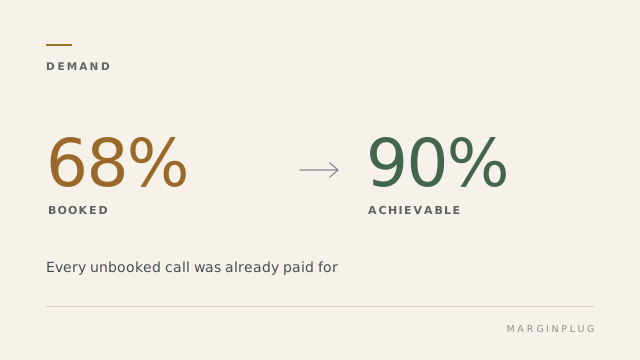
HVAC Call-to-Booking Rate: The Metric Between Your Marketing and Your Revenue (2025)
The average HVAC company books 63% of inbound calls. Top operators book 83%. That 20-point gap on 1,000 calls is $58,800/year in lost revenue from the same marketing spend. Here are the benchmarks, a booked vs. missed call comparison, and the 5 specific reasons calls don't convert.
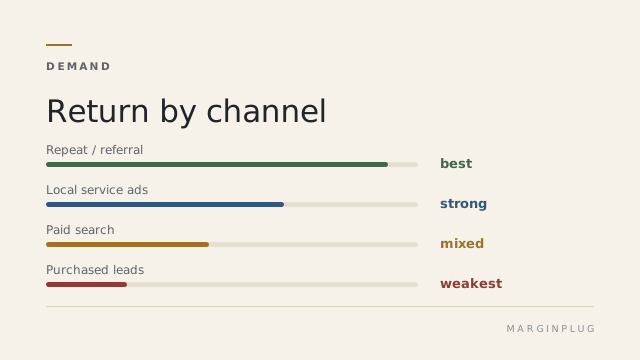
HVAC Marketing ROI: How to Know If Your Lead Sources Are Actually Profitable (2025)
Most operators spend $100K+ on marketing with no idea which channels are profitable. Cost per lead hides the truth — cost per closed job reveals it. Here are the 2025 benchmarks by channel and a 30-day tracking system anyone can run in a spreadsheet.
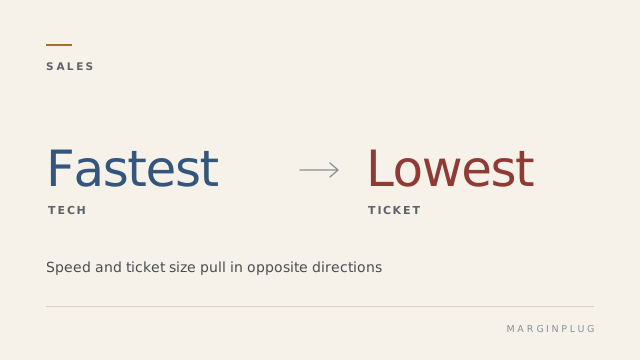
Why Your Best HVAC Tech Has the Worst Average Ticket Size
In most HVAC companies, the most experienced tech has the lowest average ticket. A 94% close rate on $294 beats a 72% close rate on $487 every time — but not for the reason you think. Here are the 4 habits that form over years and how to fix them without losing your best tech.
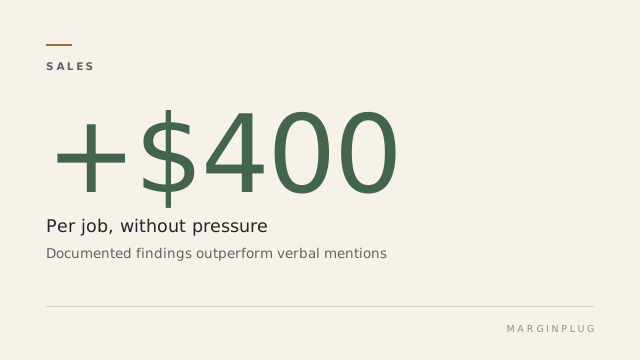
The HVAC Upsell Problem: How to Add $400 Per Job Without Overselling
The average tech leaves $280–$420 of legitimate repair scope on the table every call. It's not a selling problem — it's a documentation and presentation problem. Here's the 3-option system that adds $331K/year to a 1,200-call operation.
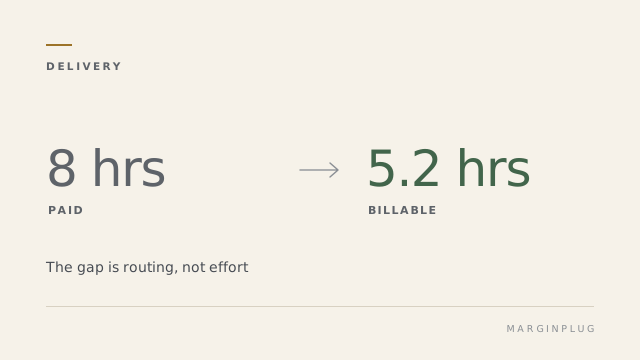
How to Know If Your HVAC Dispatching Is Costing You $10K/Month
Bad dispatch doesn't show up as a line item — it shows up as 62% utilization instead of 74%, techs on the wrong calls, and routes that scatter instead of cluster. Here are the 5 metrics that expose the leak and a 20-minute audit to run today.
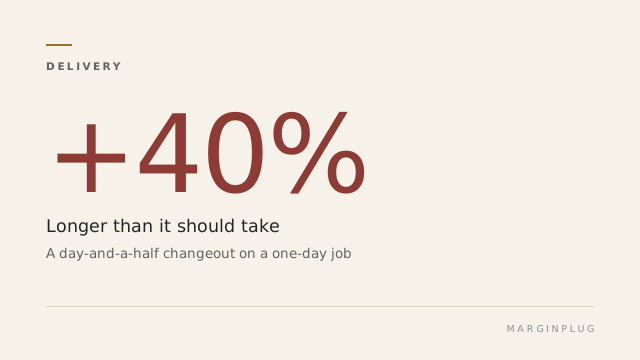
The Hidden Cost of a Long HVAC Job Cycle Time (2025 Benchmarks)
Every extra 30 minutes per job costs a 5-tech team nearly 2,000 calls per year in lost capacity. Here are the benchmarks by call type, a side-by-side of a 72-min vs 148-min repair call, and 4 operational fixes that require no new software or hires.
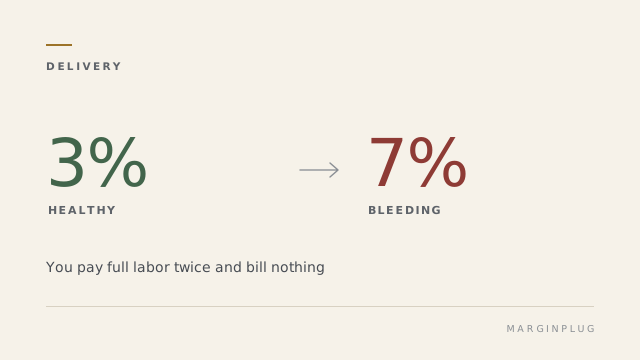
Why HVAC Callbacks Are Destroying Your Profit Margin (2025 Benchmarks)
The average callback costs $328 in labor, drive time, and overhead — with zero revenue. At a 7% rate on 1,200 jobs, that's $27,500/year buried in your cost structure. Here's the true math, the 5 root causes, and a fix for each.
HVAC Revenue Per Technician Benchmark: What One Tech Should Produce
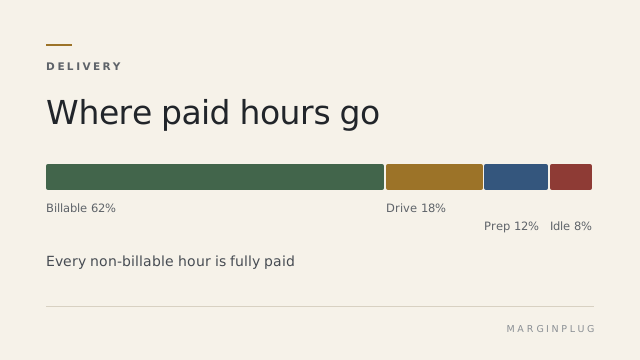
Top operators generate $180K–$280K revenue per technician per year. Average is $120K–$160K. Here are the 5 metrics that actually measure efficiency, 2025 benchmarks by business type, and the 4 operational failure modes driving the gap.
Are HVAC Service Agreements Actually Profitable? The Real Math (2025)
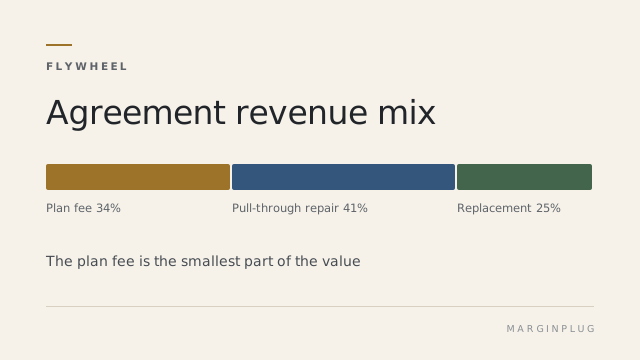
Most agreements lose $12/year on visits alone. The profit lives downstream — in repair conversion, ticket premium, and retention. Here's how to tell if yours is working, plus the 4 failure modes that kill most programs.
HVAC Overhead Costs: What They Should Be (2025 Benchmarks)
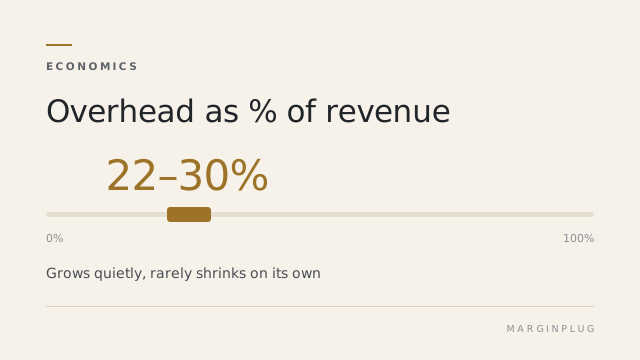
The average HVAC company runs 28–35% overhead. Top operators stay under 22%. Here are the 4 categories driving above-benchmark costs — and a 90-day reduction plan that doesn't touch your operations.
Why Your HVAC Average Ticket Size Is Low — It's Not Your Techs
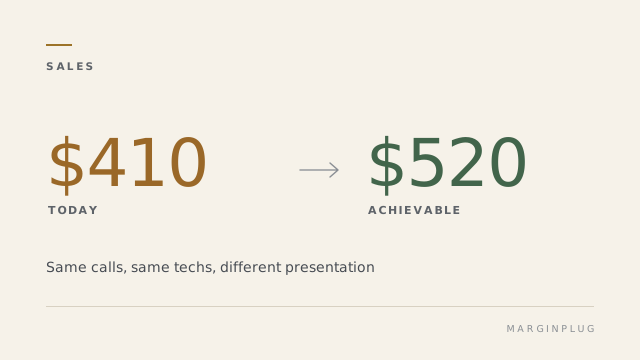
A $100 ticket increase on 1,200 jobs = $62,400 in gross profit. Zero additional spend. The cause is almost always process, not people — here are the 4 fixes.
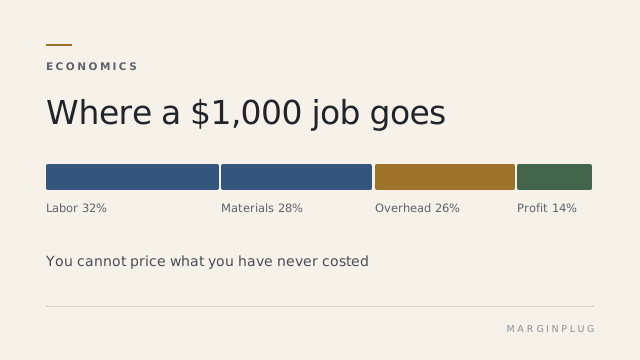
HVAC Job Costing 101: Know If You Made Money Before You Run the Next Job
One job type at 77% margin. Another at 9.7%. Same business. Invisible without job costing. Here's the 5-step framework to see it — no new software required.
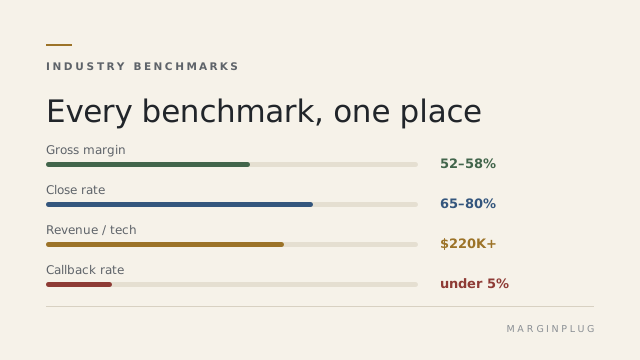
hvac-business-benchmarks-guide
Every major HVAC financial benchmark in one place — gross margin, close rate, RPTD, CAC, labor burden, repeat customer rate. All benchmarked by revenue band.
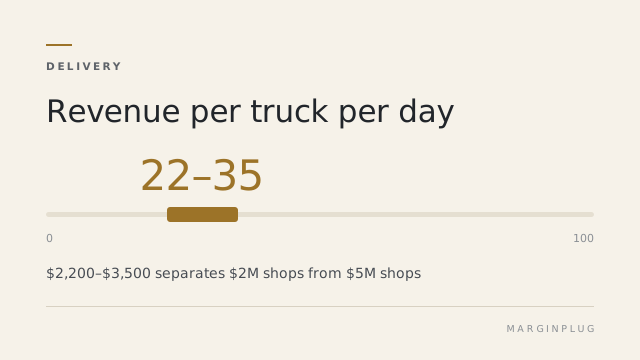
Revenue Per Truck Per Day: The Metric That Separates $2M From $5M Companies
Same 4 trucks can generate $1.46M or $3.33M depending on RPTD. Here's the benchmark, the calculation, and the 4 operational levers that move the number.
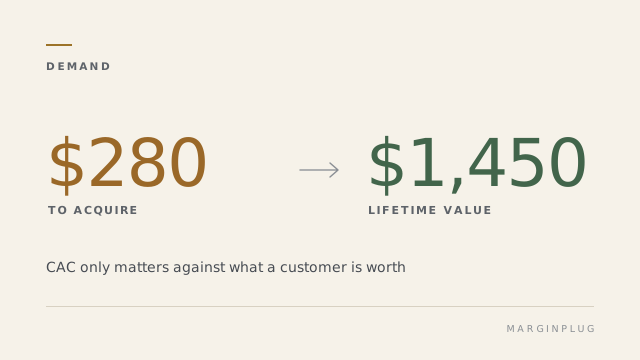
How Much Should an HVAC Company Spend to Acquire a Customer? 2025 CAC Benchmarks
Referrals cost $28. Yelp costs $310. Most businesses have 2–3 cash-flow negative channels running right now. Here's how to find yours.
What's a Good HVAC Close Rate? 2025 Industry Benchmarks
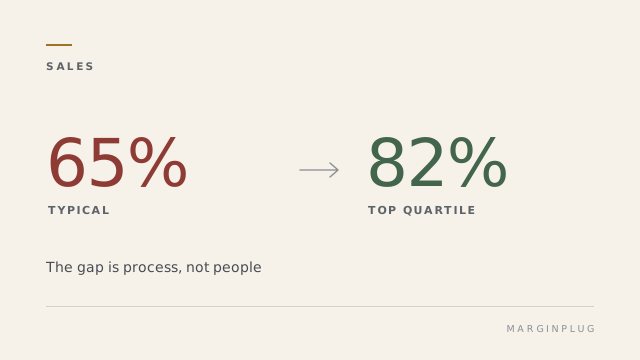
Average is 65–75%. Top performers close 82–88%. Benchmarks by call type, revenue band, and the 4 real reasons yours is probably below average.
Flat Rate vs Hourly Pricing for HVAC: Which One Is Destroying Your Margins?
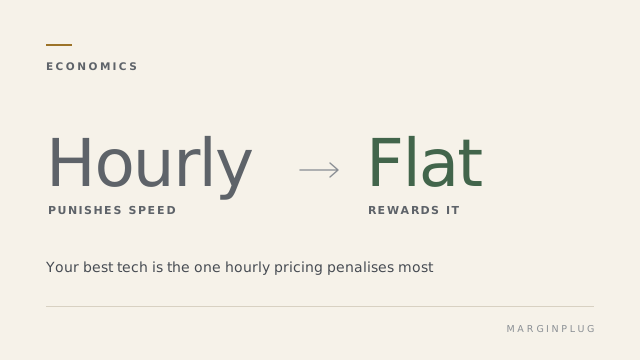
The same job earns 70% gross margin on flat rate and 52% on hourly. The model is settled — but flat rate only works if implemented correctly.

How to Find Your HVAC Profit Leak in Under 10 Minutes
Five metrics. Five benchmarks. A step-by-step self-diagnostic that tells you exactly which profit pillar is leaking — and what to fix first.
The Real Cost of an HVAC Technician: Your Labor Burden Is Higher Than You Think
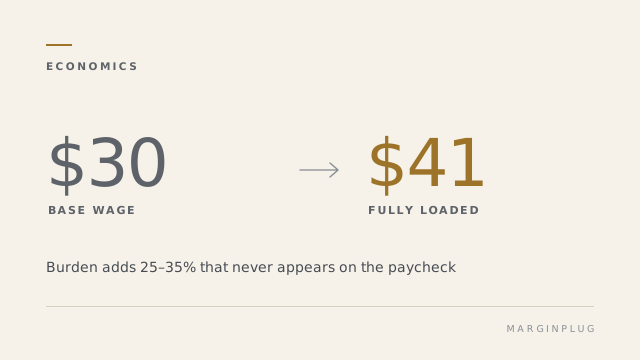
Most owners assume $28/hr. The true loaded cost is $54/hr. Here's the exact calculation — and what the gap means for your margin and pricing.

Your HVAC Business Health Score: What 85% of Owners Don't Know
Score your business across 5 profit pillars in under 10 minutes. Most owners land between 38–54. Here's what the number means and what to fix first.
What's a Good Gross Margin for an HVAC Business? 2025 Benchmarks
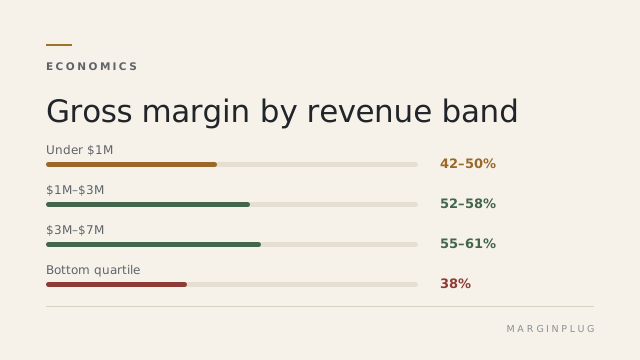
Top-quartile HVAC companies run 57–63%. Most owners are calculating theirs wrong. Here are the real benchmarks — and the 3 calculation mistakes to fix first.

The 7 Hidden Profit Leaks Killing HVAC Companies Under $3M
Most businesses in this range have 3+ active leaks. Here's how to find yours — with dollar estimates attached to each.
Why Your HVAC Business Is Busy But Broke — And Where the Money Is Actually Going
Trucks running, phones ringing, revenue climbing — and the checking account still looks wrong. We break down the five hidden profit leaks draining HVAC businesses under $5M.